Community-Led Growth: A Harley-Davidson Case Study
Community-led growth, mapped onto a six-stage customer journey. The 1983 Harley Owners Group program that turned a million customers into 1M+ members across 1,400 chapters in 100 countries.

Founder, ProveWorth
Key Takeaways
- 1A six-stage member journey (Stranger to Skeptic to Leap to Win to Regular to Advocate) you can use to audit your own community in 15 minutes.
- 2Six concrete community-building moves from the 1983 Harley Owners Group program that turned a million customers into 1M+ members across 1,400 chapters in 100 countries.
- 3The Friction Filter — two questions to ask five members each — that turns the framework into a working diagnostic this week.
In 1983, Harley-Davidson had a million customers and zero community members.
Quality control issues had wrecked the brand's reputation.
Riders belonged to the American Motorcyclist Association, an outlaw club, or no one. The factory had no list of its own owners. It had bikes on the road and nobody's phone number.
The fix was a program that sounded silly at the time and obvious now. Every new Harley would ship with a free first-year membership in a group nobody had heard of.
Card, pin, patch, in the box with the bike. They called it the Harley Owners Group. HOG, for short. Year one, 33,000 sign-ups. Forty-two years later, more than a million members across 1,400 chapters in 100 countries.
It is the most copied loyalty program in business and I'd never even heard of it. (Vaughn Beals, the CEO at the time, working with chief designer Willie G. Davidson and a small team at the Milwaukee plant.) The reason most modern programs are weak imitations is they copied the artifacts (the card, the patch, the magazine) without copying the intention behind them.
Community-led growth is when member participation, member rituals, and member-produced experiences become the primary engine of acquisition, retention, and expansion, instead of paid or organic advertising. The framework underneath examples like Notion or Duolingo works in any category where customers can be turned into participants. Harley-Davidson built the original version of it in 1983 and ran the same six moves for forty-two years.
Stick with me and you'll get: a six-stage framework you can use to audit your own community today, six concrete moves to steal from a program that turned a customer base into a country-wide membership, and one mid-paragraph story about a parking lot in Milwaukee that I think is the case-study sentence.
How to build a community: the six-stage map every member moves through
Every community a person joins, free or paid, online or in a parking lot, moves them through some version of these six stages:
Stranger. They don't know you exist.
Skeptic. They have found you. They don't believe you can help them.
Leap. They paid or signed up. They are scanning for evidence they shouldn't have.
Win. They got a small result. Now they need a meaningful one or they drift.
Regular. They got value. They are busy. They will forget about you tomorrow.
Advocate. They got the result. Now they want to matter.
The community builder's job is to design what happens at each stage on purpose. Most don't. Most communities are heavy at sign-up, leaky through the middle, and silent at the end.
What's interesting about Harley is they put a deliberate move at every stage and ran it for forty plus years without flinching, fully visible from the rider's seat. Below is what each one looks like.
Stage one. Stranger: they had customers, they didn't have members
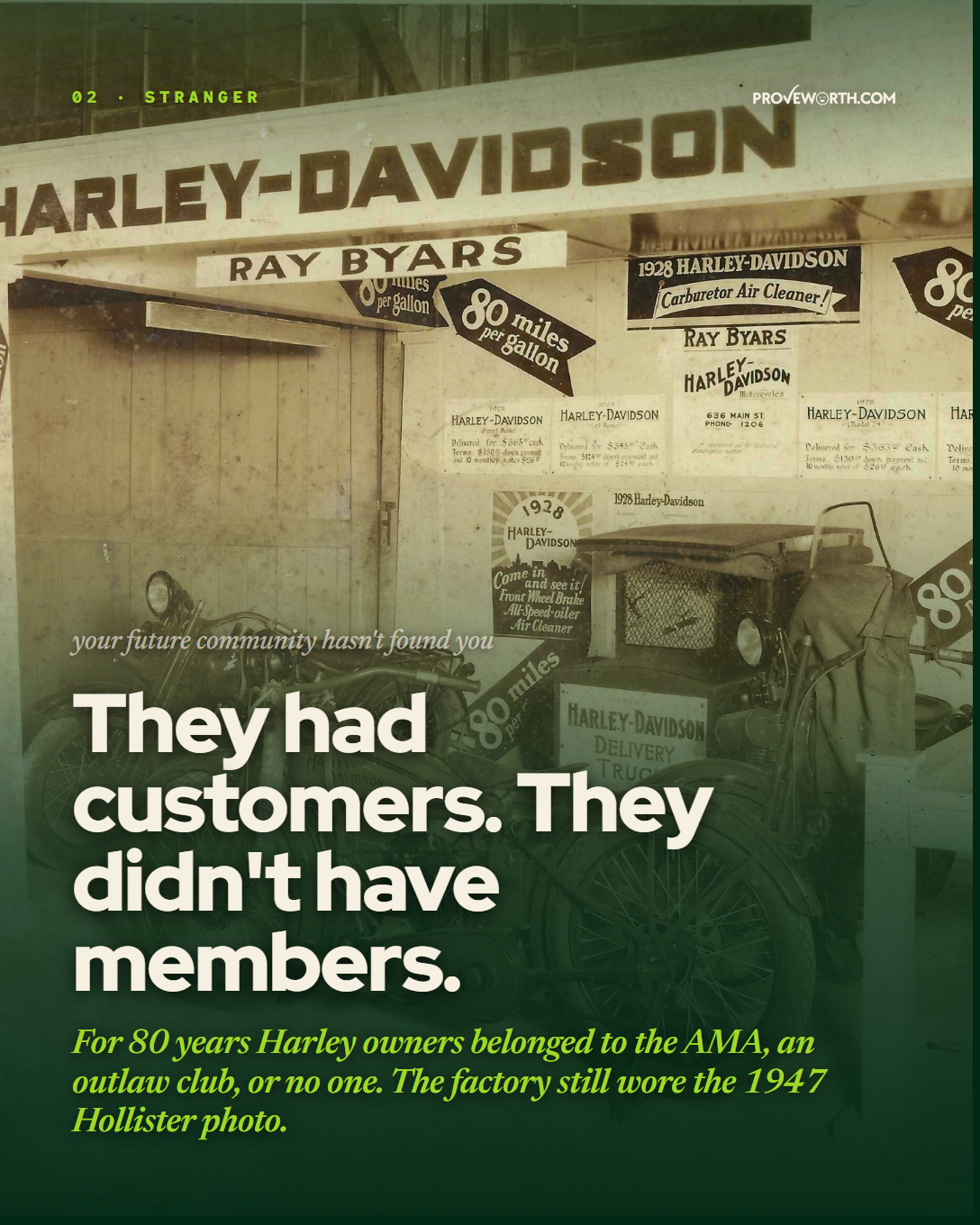
Byars Harley-Davidson dealership, Beaumont TX, circa 1928. Photo by Cjmodica.
For eighty years before the Harley Owners Group came to life, Harley sold bikes and watched the riders ride away. The Hollister photo from 1947 ran in Life magazine and defined the brand in the public eye for a generation. A man passed out drunk on a bike, beer bottles around him. The American Motorcyclist Association called it staged. But the damage was done anyway.
So the riders who actually loved the bikes did what people do when the brand can't carry the social weight of the product. They joined something else. The American Motorcyclist Association. The Hells Angels. Even local outlaw clubs. The community was somewhere else, run by somebody else, telling a story the factory couldn't control.
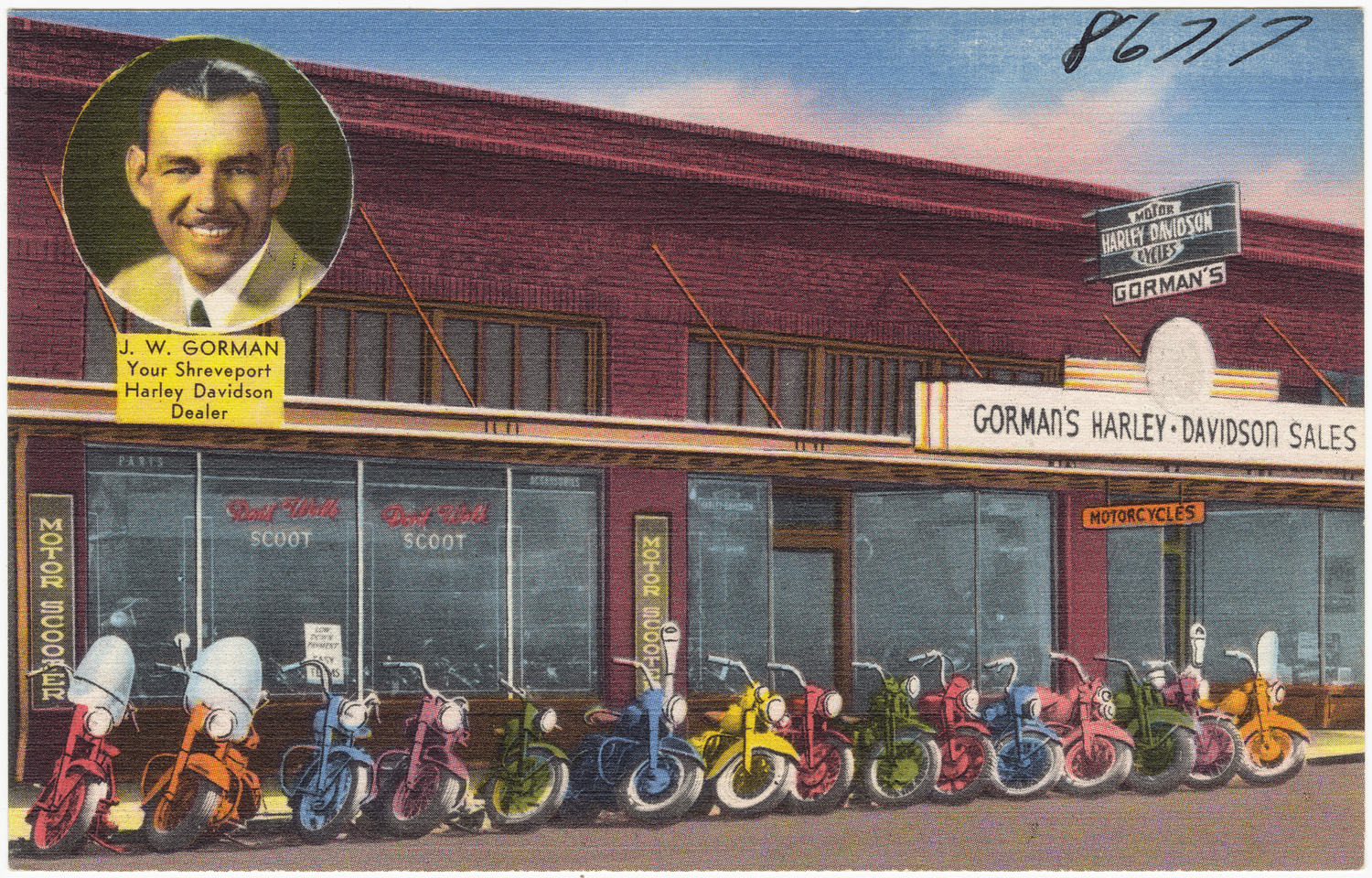
Gorman's Harley-Davidson dealership postcard, circa 1940s. Postcard from Tichnor Brothers Collection.
That's stage one for almost every brand. You have buyers. You don't have a list. You don't have a place. You have a logo that you hope your buyer puts on a jacket and then wears to a meeting you don't run.
The takeaway for community builders: the first stage-one move is not always getting more customers. It's packaging what you're offering and giving people something real they can be part of.
Stage two. Skeptic: they let the Harley dealers run the club
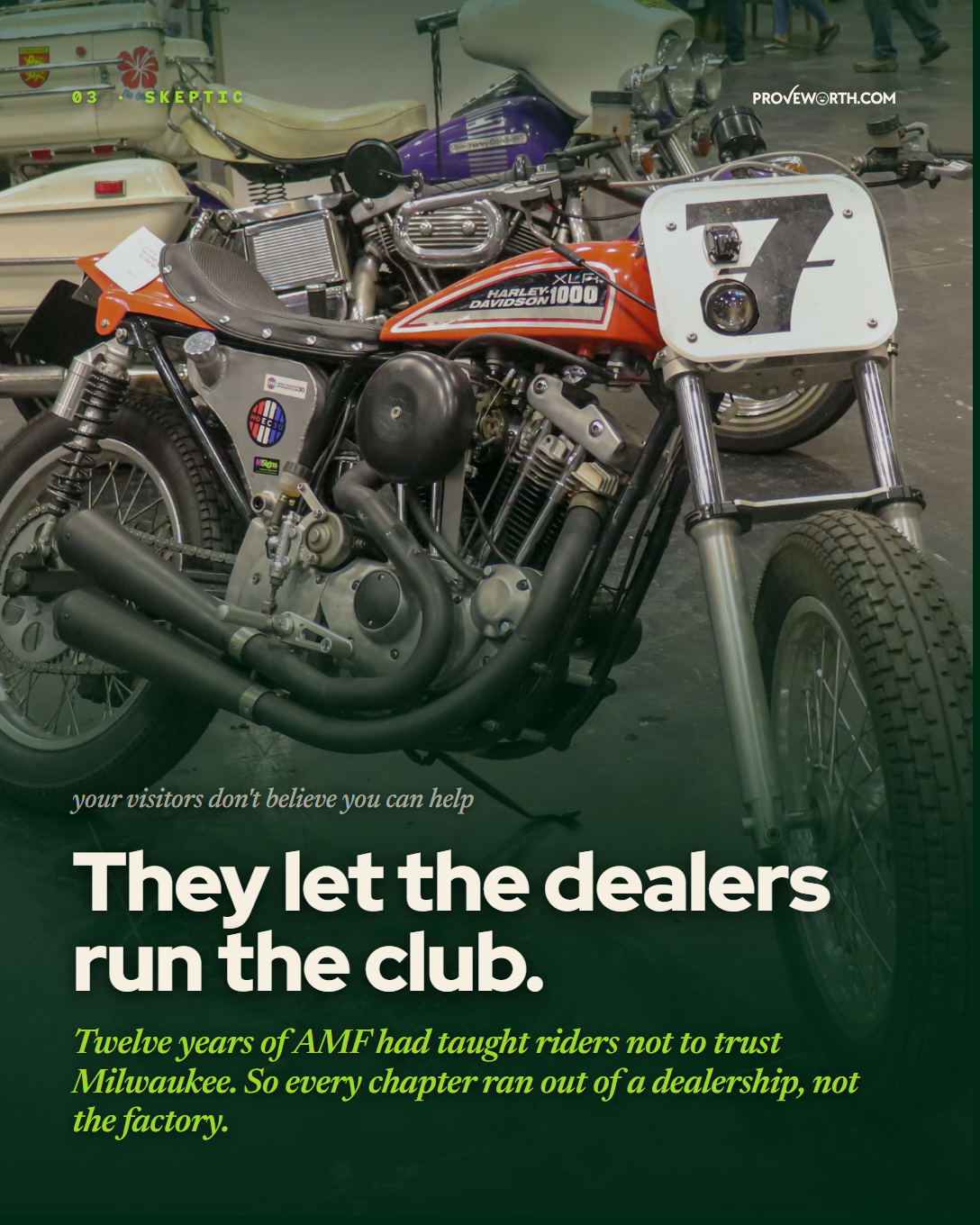
1980 Harley-Davidson XLR-1000 Sportster, AMF era. Photo by Vauxford.
By 1983 the rider population didn't trust the factory. Twelve years of American Machine and Foundry (AMF) ownership had pumped out bikes that leaked oil and broke down in front of the people who had just paid for them.
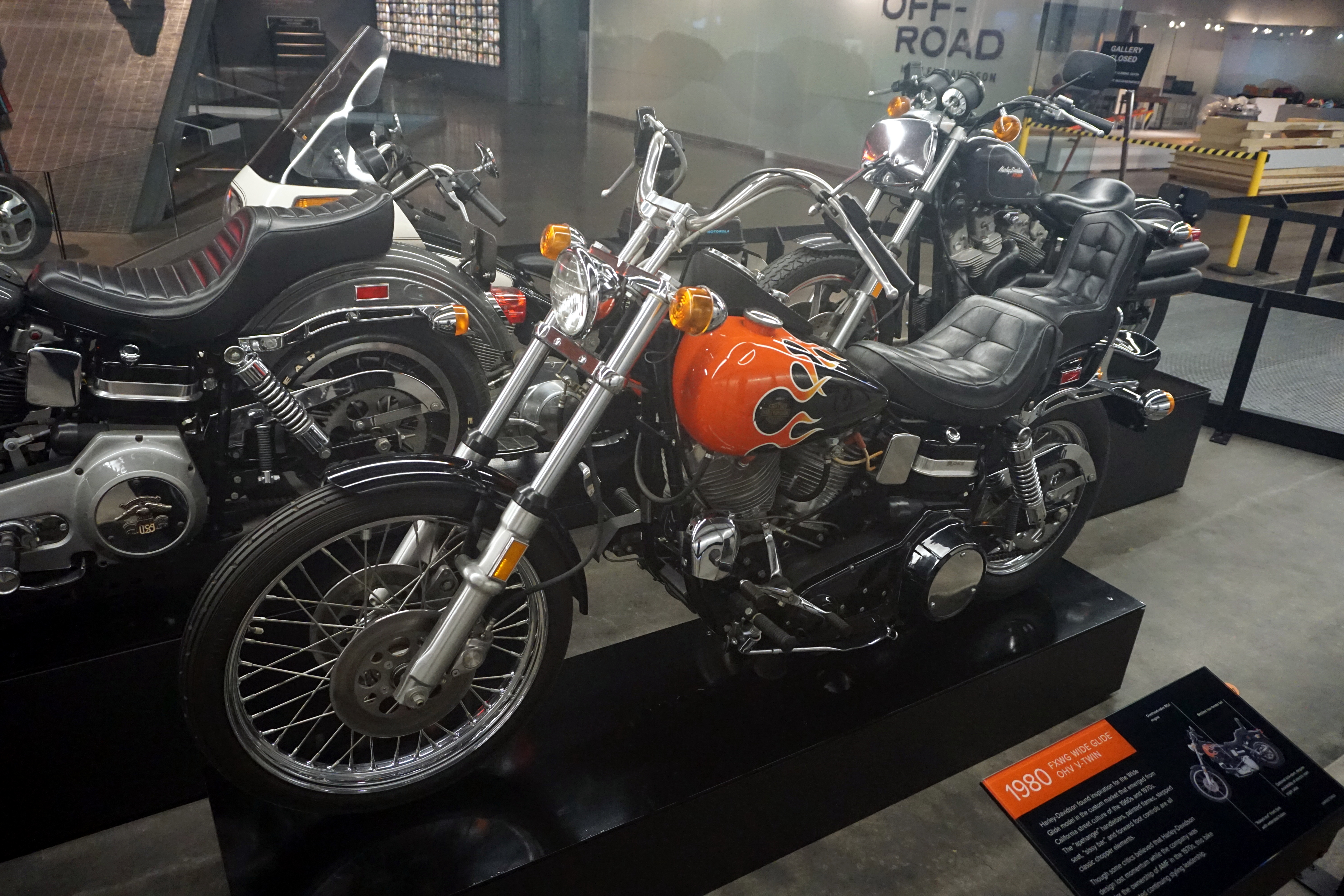
1980 Harley-Davidson FXWG Wide Glide, AMF era. Photo by Michael Barera.
The decision the Harley team made was structural and quite frankly, necessary to survive. Every chapter would operate out of an authorized dealership, sponsored by the dealer, run by the dealer's staff and rider volunteers. Local. Autonomous. Off the factory's official org chart.
The dealers had local trust. The factory did not. A new rider's first contact with the club happened in a building they already drove to. A skeptic visiting that chapter wasn't visiting Milwaukee. They were visiting Bob's Harley-Davidson, where Bob's son sold them the carburetor last spring. They (hopefully) loved Bob!
This is the move most loyalty programs miss. Trust does not transfer down from the brand. Trust transfers across from a known face. A skeptic listens to someone they recognize before they listen to a logo.
The takeaway for community builders: at stage two, do not put the founder in front of the skeptic. Put a member, a moderator, a dealer-equivalent, somebody the skeptic recognizes as a peer. The trust transfer happens sideways, not down.
Stage three. Leap: they put a membership card in every box
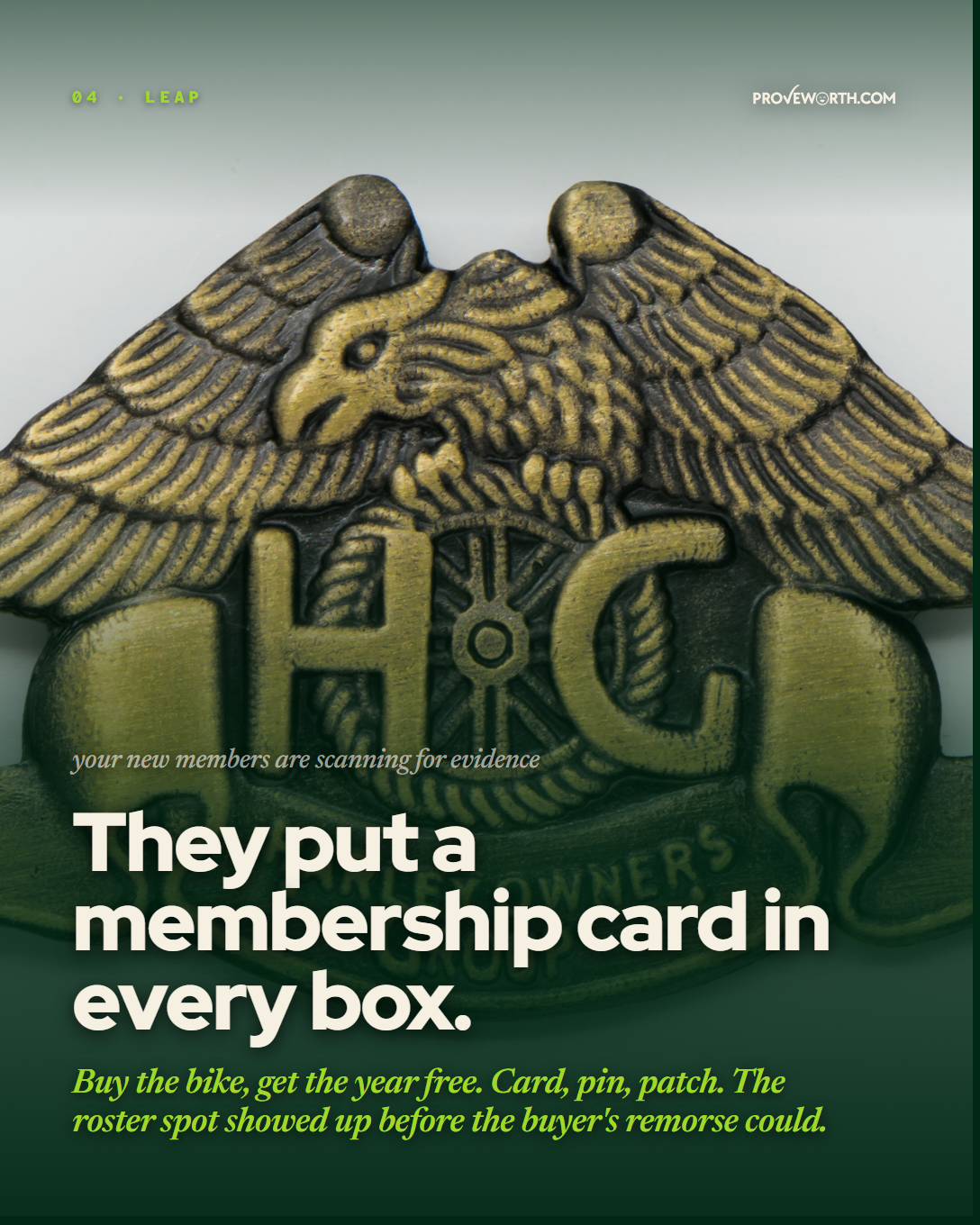
Harley Owners Group brass membership badge. Photo by Jacek Halicki.
The buyer hands over four thousand 1983 dollars and rolls a new Harley out of the showroom. Somewhere in the next five minutes, the dealer pulls out a manila envelope. Card. Pin. Patch. Welcome to the Harley Owners Group. Your first year is free.
This move is small and easy to fly under the radar. It is the exact move that turns a transaction into a membership.
The first 24 hours after a buyer pays is the most anxious window in their entire relationship with you. They have handed over money. The bike is in their garage. Somewhere in their brain a voice is asking "did I just buy a problem?" Especially back then in the 80s when the brand was so tarnished.
Anything you do in that window that pays off the trust they extended is worth a hundred things you do later.
Harley's choice for that window: hand over an object that activates more value before the buyer has left the dealership. The bike is the product. The card is the receipt of belonging to something meaningful. Tap the patch on a jacket and the buyer becomes legible to other riders. The transaction has become a membership before the engine has cooled.
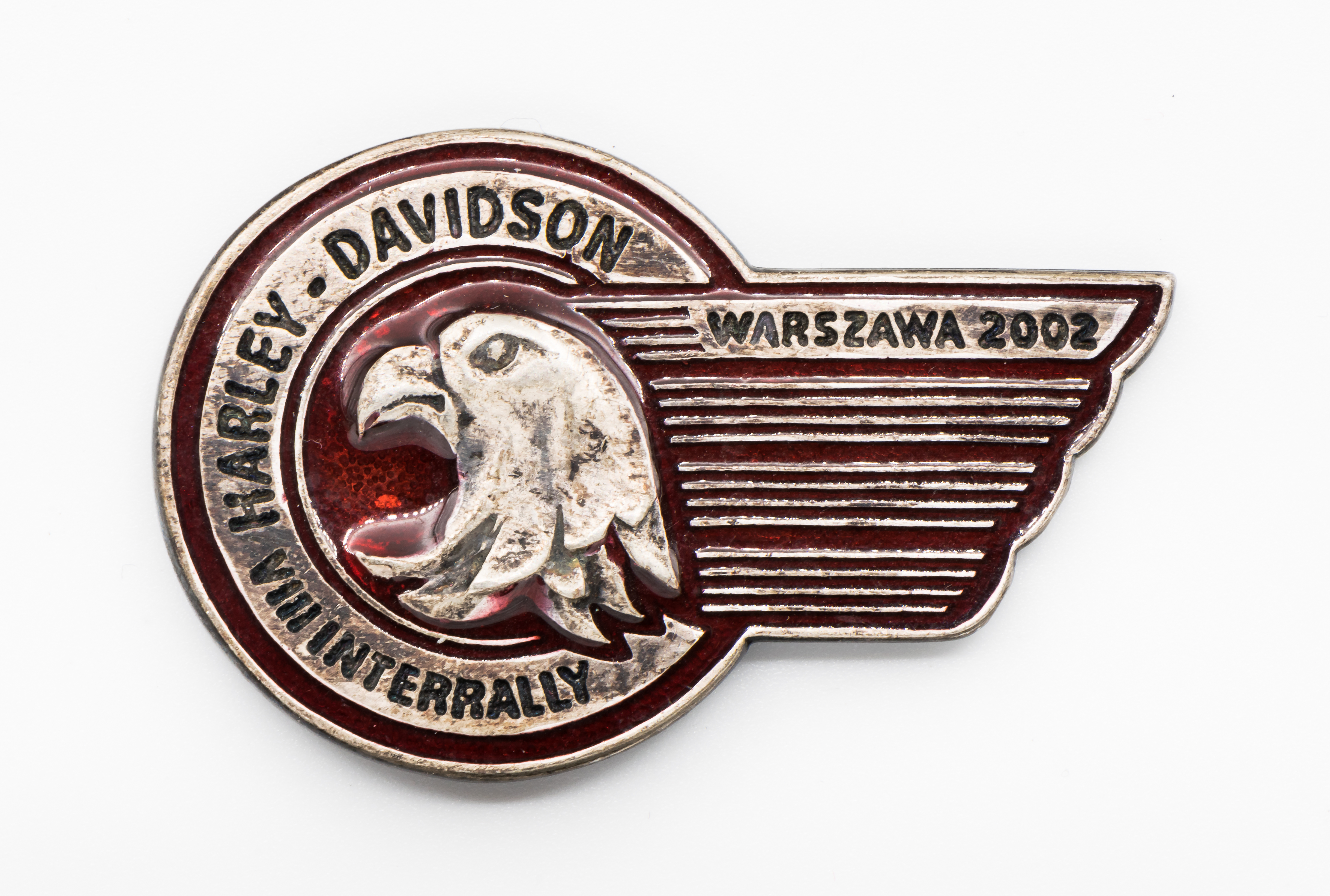
Harley-Davidson VIII Interrally Warsaw 2002 commemorative pin. Photo by Jacek Halicki.
Notice what was free. The first year of membership, not the bike. A free first year is a marketing line. A free first year that ships in the box with a four-thousand-dollar product is a structural decision. The buyer is now opted-in to a roster on day one. Day three-hundred-sixty-five is the renewal question and by then they've ridden two chapter rides, three Bike Nights, and read four issues of the magazine. If you've formed a habit that fosters connection, then you've already sold them on stickin' around.
The takeaway for community builders: design the first 24 hours after payment as if the member is going to ask for a refund. Build in three quick wins, three pieces of evidence, three signals that say "you made the right call." Put the membership in the box with the product, not in an email three days later. The trust window after a leap is short and load-bearing.
Stage four. Win: they turned the dealer parking lot into a starting line
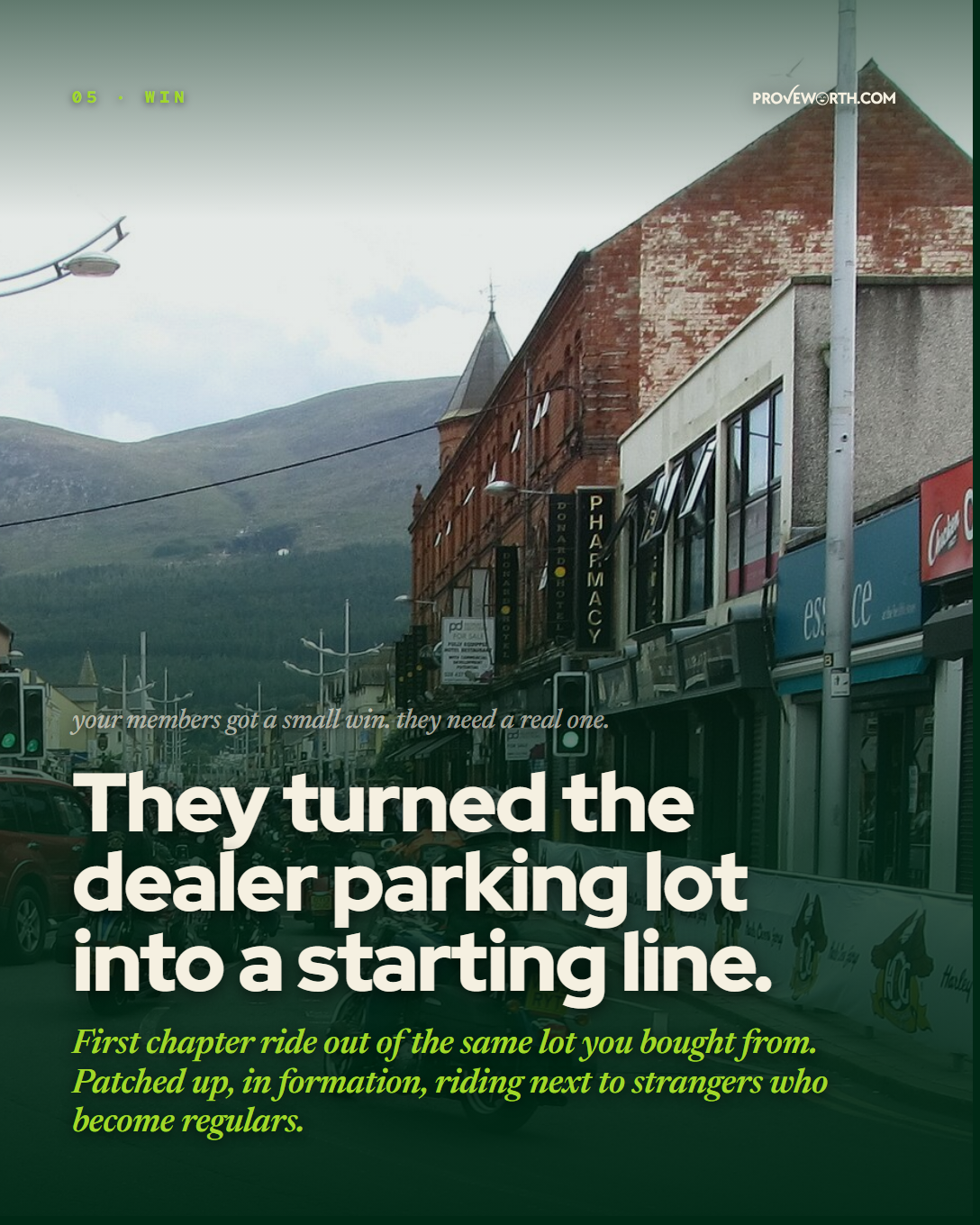
Belfast HOG chapter, Newcastle ride. Photo by Albert Bridge.
The first chapter ride is the moment a buyer finds their people, and on the asphalt of all places.
I want to dwell on this. The ride happens on a Saturday morning at a dealership the buyer has been to twice already (once to look at the bike, once to buy it). They show up wearing the patch the dealer handed them. They park in a corner of the lot that has fifteen other Harleys lined up. A guy walks over, leather vest, fifty years old, three mileage pins on the chest, and asks if it's their first ride.
The first ride is the moment a buyer goes from "guy with a new Harley" to "Bob from the Belfast Chapter." The vocabulary changes. The role changes. The Saturday morning becomes a permanent part of the calendar they didn't have last week.
The ride itself is straightforward. Twenty bikes leave the lot in formation. The Road Captain has the route. The Tail Gunner is at the back. Somebody at the front, somebody at the back, the buyer in the middle, riding next to people they didn't know at 9 a.m. and will text next Tuesday. They go to a diner. They come back. They take a chapter photo on the way out.

Road Captain Rory Adams leading the 2012 Dakota Thunder Motorcycle Run, Black Hills. Photo by Airman Ashley Woolridge, U.S. Air Force.
What Harley did: handed the buyer a patch and a parking lot. What the chapter did: stood in the parking lot in a way that made the buyer's arrival inevitable. What the buyer did: showed up wearing the patch, found the lineup, didn't quit when the guy with three mileage pins walked over.
The "small win" engineered at stage four is social, not mechanical. The buyer didn't get faster at riding. They got somewhere to ride to, and somebody to ride with. The lot at Bob's Harley-Davidson does the same job for HOG that the first concert does for Electric Callboy and that an in-product activation moment does for SaaS. It is the moment a new member meets another member and finds out they aren't alone.
The takeaway for community builders: the first real win in a community is rarely educational. The first real win is the moment a member meets another member and finds out they aren't alone in liking what they like. Design that moment. Pick the parking lot equivalent inside your community (the first IRL meet, the first synchronous call, the first shared ritual that requires people to show up at the same time). Give your stage-four members a reason to find each other and a place to go and find them.
Stage five. Regular: they made the calendar do the work
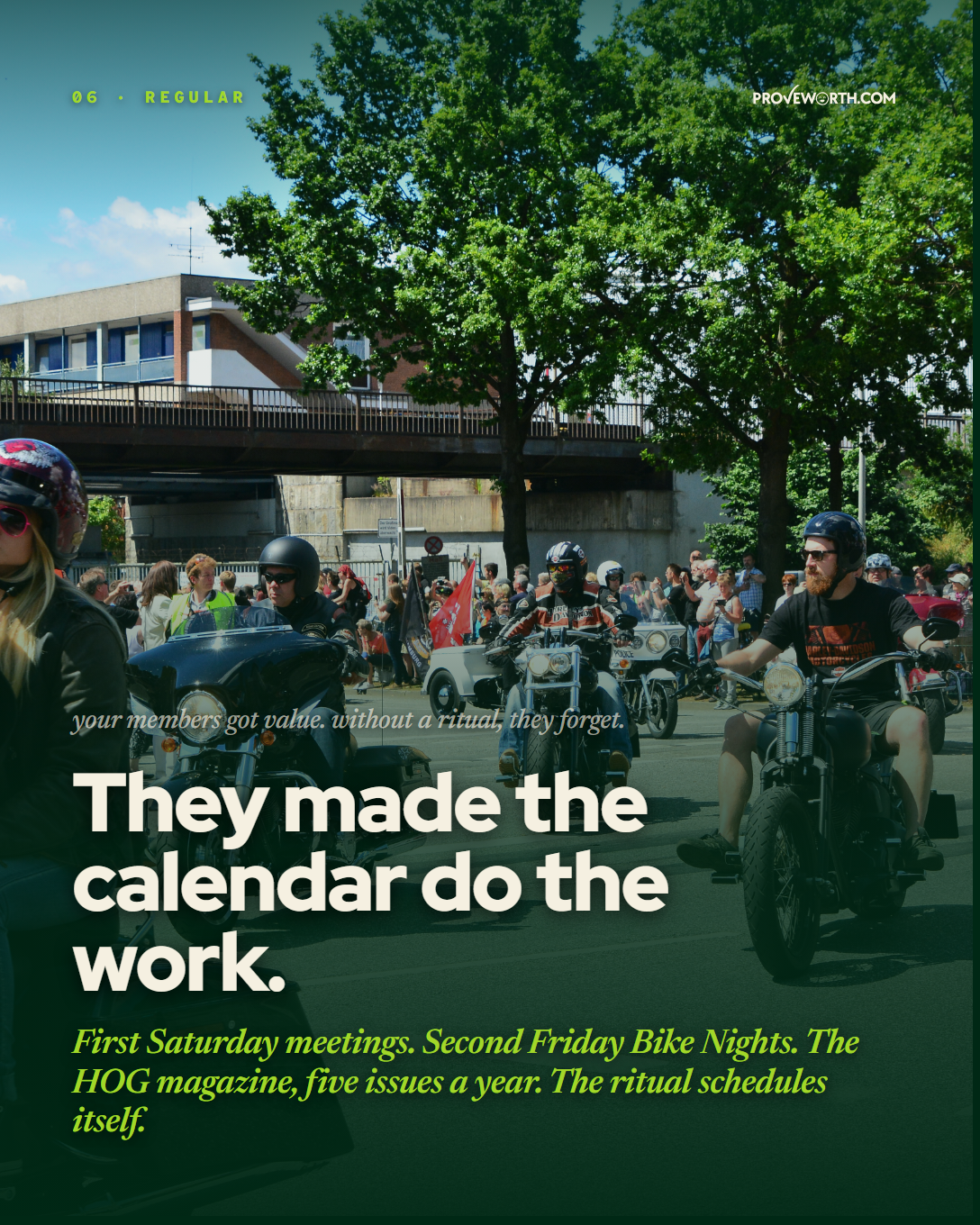
Hamburg Harley Days parade, 2015. Photo by Frank Schwichtenberg.
Stage five is where most communities die. The new-member rush is over. The first wins have happened. The member is busy. They joined for free or maybe paid for a year, they got value, and now their inbox has 47 other things in it. Without a ritual that returns them to you on the calendar, they will quietly forget aboutcha.
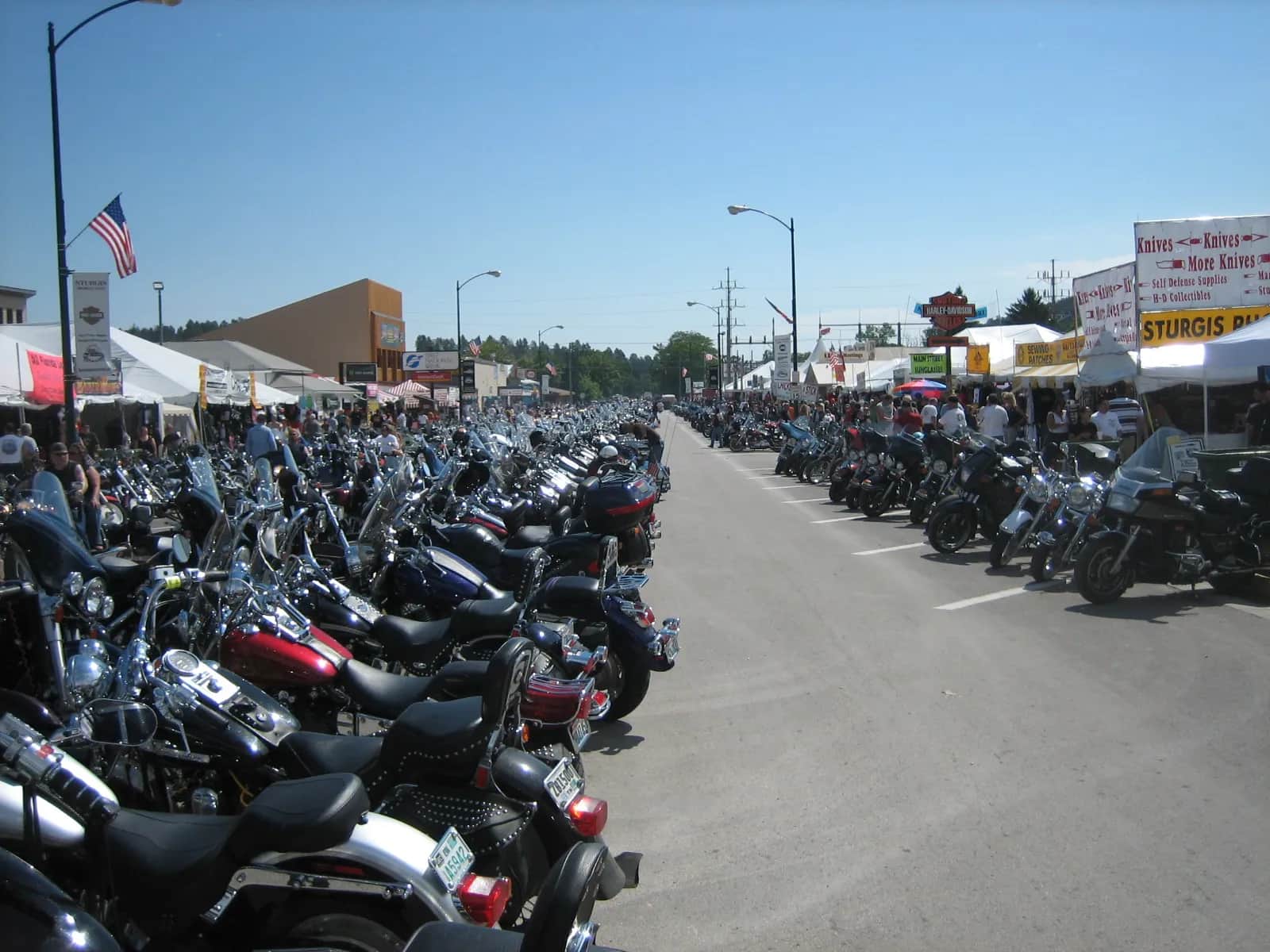
HOG built the most-imitated calendar in motorcycling. First Saturday of the month, chapter meeting. Second Friday, Bike Night. The HOG magazine, five issues a year, mailed to the member's house with photos of other members from chapters around the country. The rally calendar built around Sturgis in August, Daytona in March, Laconia in June. Every event a date that exists for one reason.
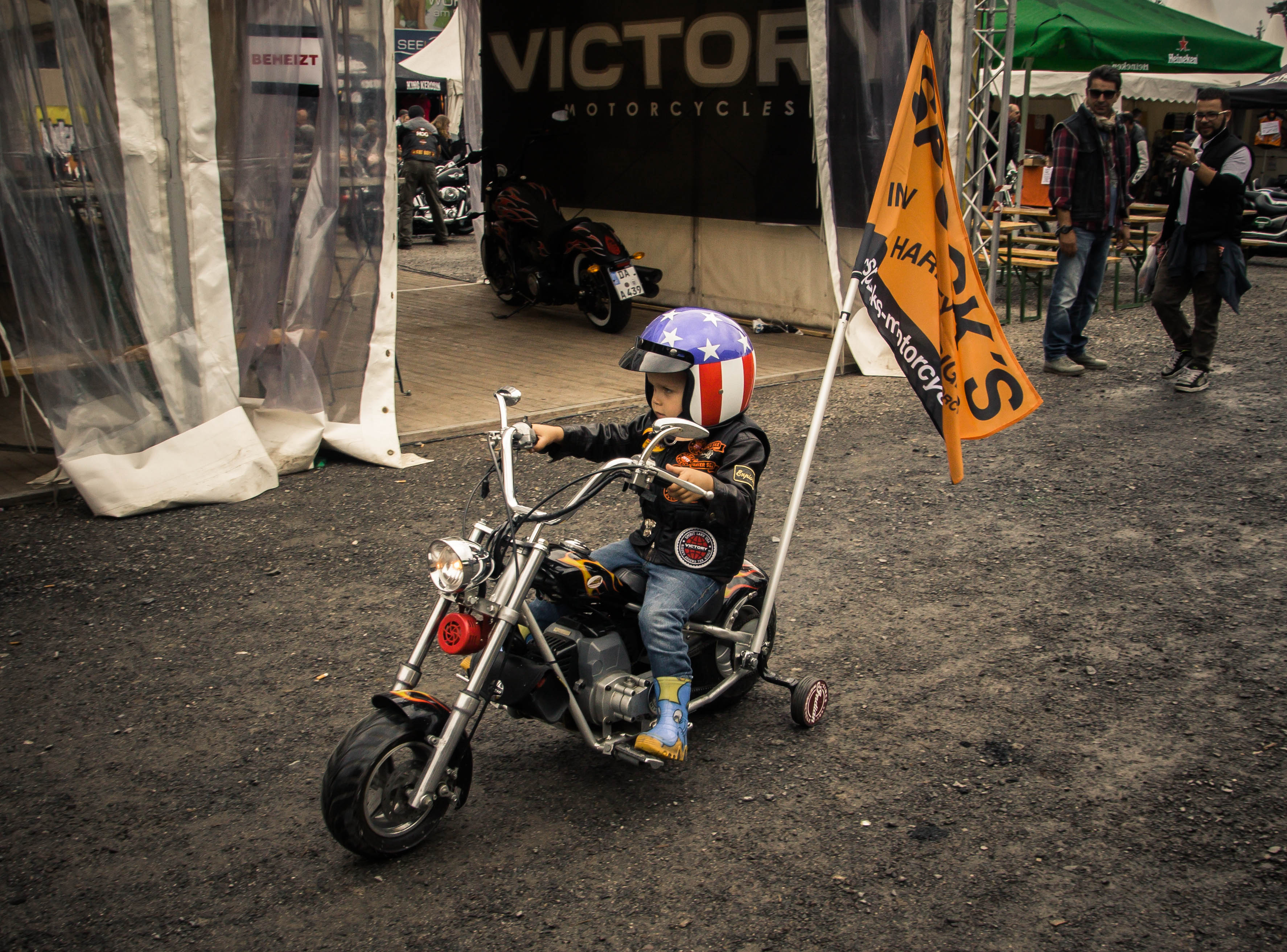
European Bike Week 2014 at Faaker See, Austria, the HOG European flagship rally. Photo by Greta Ceresini.
The genius is that the ritual is on a fixed cadence and the member doesn't have to maintain it. Bob doesn't have to ask his chapter when the meeting is. It is the first Saturday. Every month. For forty-two years. The chapter calendar is doing the retention work that a SaaS company tries to do with email and notifications. Harley does it with a date.
The HOG magazine matters more than it looks. It shows a member in Belfast that there is a member in San Jose riding a similar bike to a similar event. The reader isn't being marketed to. Most of us can tell when a marketer is trying to work their magic. Instead the reader is being shown that the thing they do on Saturday is being done by 10,000 other people on the same Saturday. The magazine is the calendar made visible.
The takeaway for community builders: every community needs a calendar event that exists only because the community exists. Quarterly summits. Annual conferences. Monthly first-Friday calls, maybe even just to meet one another or chat about a topic loosely. The event itself matters less than the calendar shape it creates. Members get returned to the community on a rhythm they don't have to remember once they bake it into their own schedules.
Stage six. Advocate: they turned mileage into rank
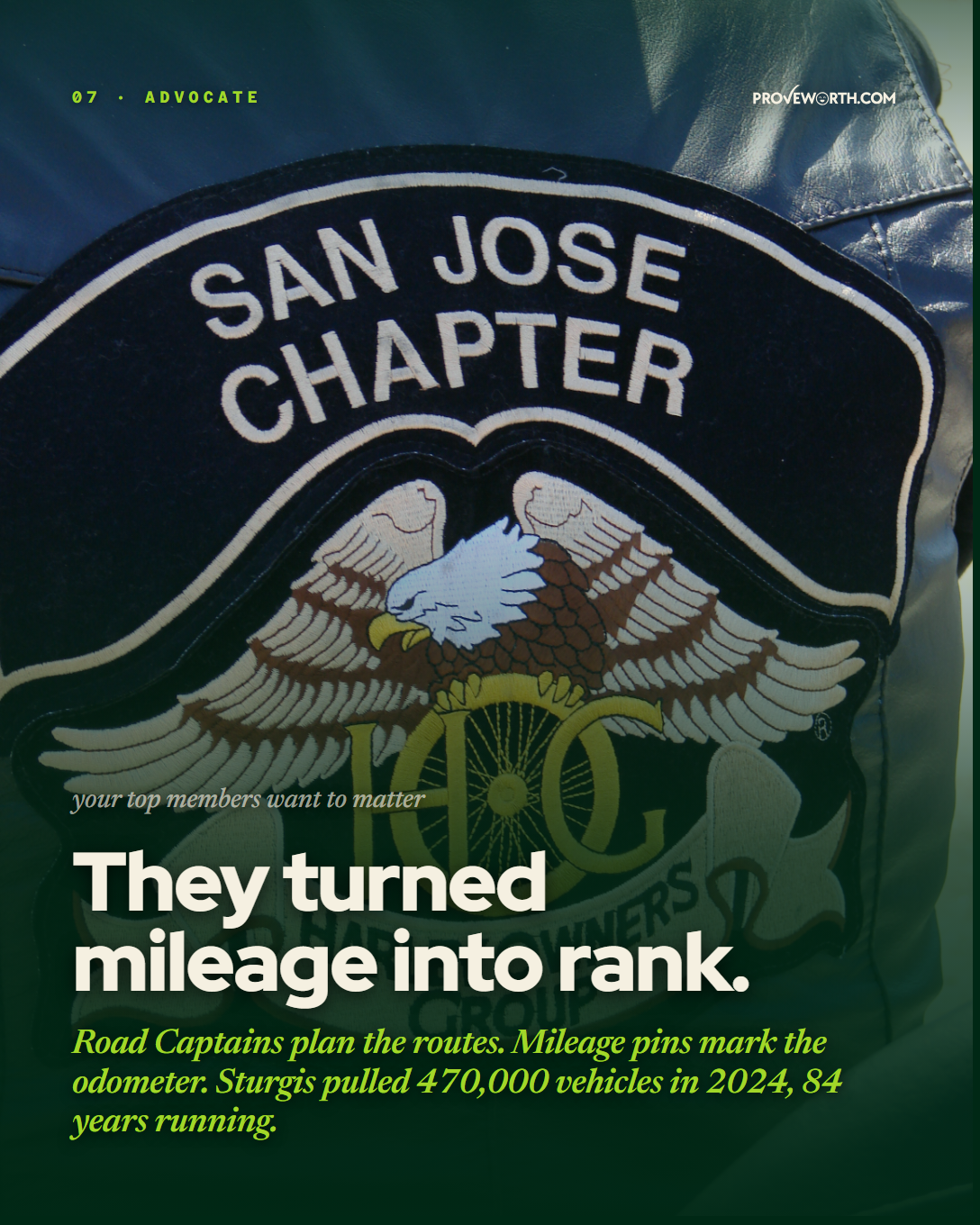
HOG San Jose Chapter patch. Photo by Craig Howell.
The advocate stage is where a community either creates roles or wastes its best members. Most communities waste them. The top member sits in the group writing 200-word replies for free until they get tired and leave. The community lost the person who would have run a stage of the journey for everyone else.
HOG built a rank ladder. Road Captain plans the routes, leads the ride, handles the logistics. Tail Gunner rides the back of the formation, picks up stragglers, knows the route in reverse. Mileage pins on the vest mark the odometer (50,000, 100,000, 250,000 miles, all the way up). Chapter Officer. Director. The Sturgis Rally itself has 84 years of accumulated rank and is still running.
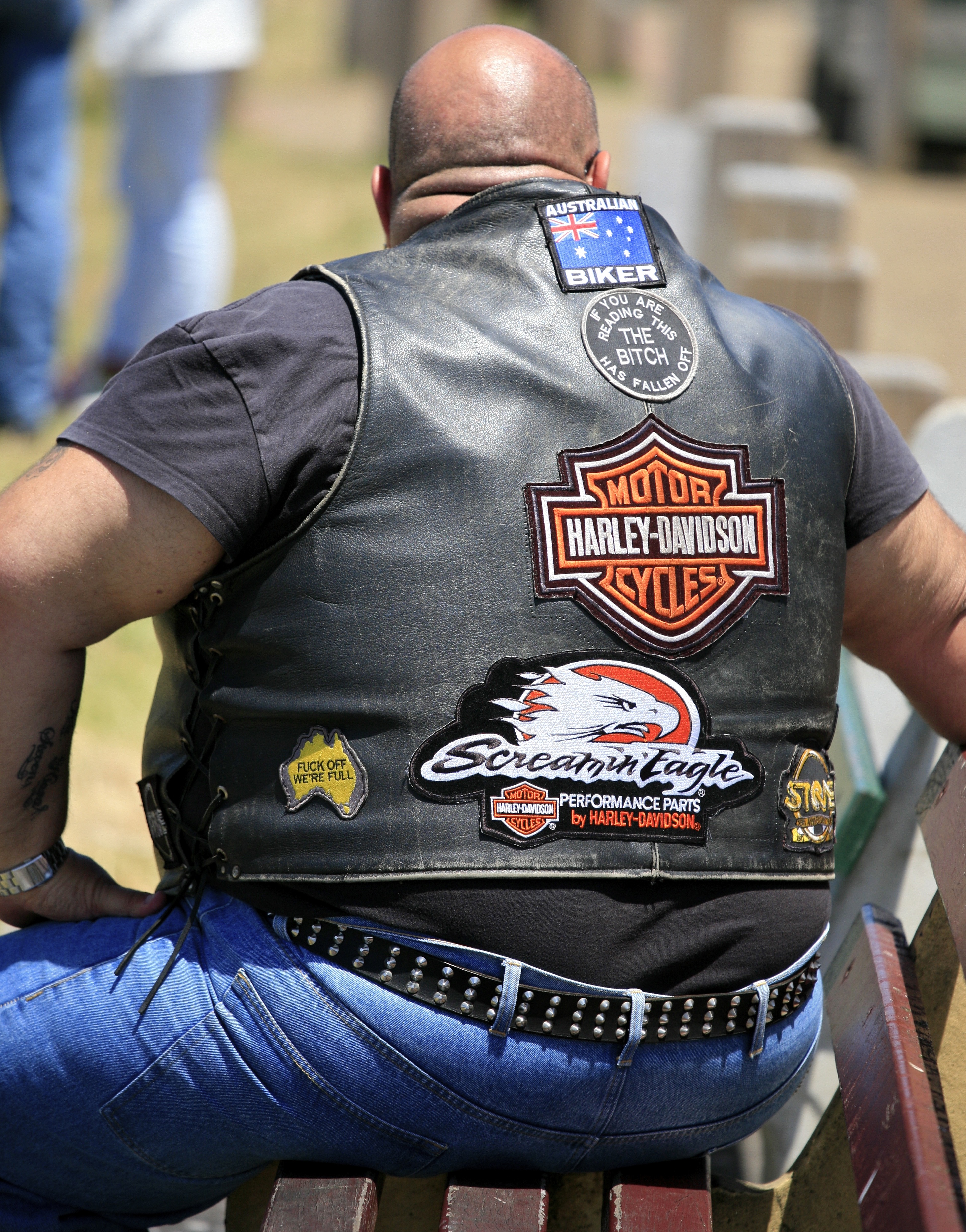
Back of a rider's leather vest densely covered with Harley-Davidson patches. Photo by Alex Proimos.
The pins are well-designed advertisements. A 47-year-old in a chapter meeting with a 250,000-mile pin on his vest is broadcasting credibility to every new member in the room. The new member sees the pin and thinks: hot damn that dude (or dudette) has ridden a quarter of a million miles. They are the person to ask. The community has just done the founder's job for them. The expert is identified, the new member is routed to the expert, and the founder didn't have to assign anyone to anything.
This is what advocacy actually looks like at scale. The advocate is operating a piece of the experience. They are producing the moment. They have a job inside the journey, visible to other members, that they earned by showing up.
The takeaway for community builders: the goal at stage six is the role itself, not a testimonial. Find the members who want to matter and give them a job. Run the new-member call. Host the office hours. Curate the resource library. Lead the cohort. Inside a community, the advocate looks like a part-time co-host of the experience itself. Then mark them visibly so the rest of the community can see the rank.
Where your community is leaking: the diagnostic
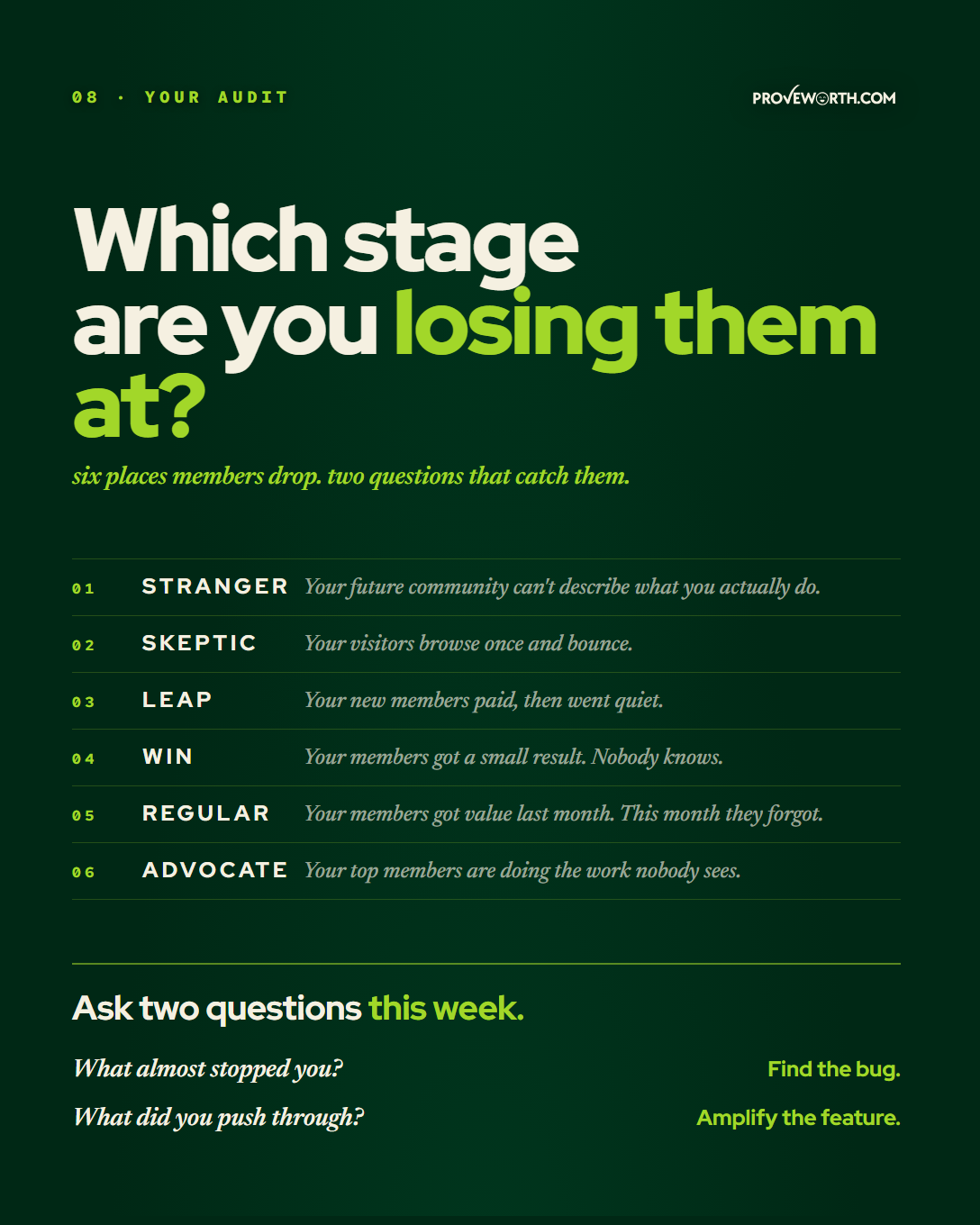
Same six stages. One slide that turns the framework on the reader.
Read the six stages again and pick the one your community is leaking at. Each stage has a tell:
Stranger. Your future community can't describe what you actually do.
Skeptic. Your visitors browse once and bounce.
Leap. Your new members joined, then went quiet.
Win. Your members got a small result. Nobody knows.
Regular. Your members got value last month. This month they forgot.
Advocate. Your top members are doing the work nobody sees.
One of those lines is you. The point of the framework is to make the leak nameable. Once it has a name, you can do something about it.
The move on top of the diagnostic is what ProveWorth calls the Friction Filter. Ask two questions this week, in your group, by name and privately, to five members each:
What almost stopped you from joining (or staying)? The answers are the bugs. Fix them.
What did you push through to stay? The answers are the features. Amplify them.
Five answers to each question is enough to see the pattern. The pattern is the work. The bugs at stage two are different than the bugs at stage five. The diagnostic tells you which stage to ask about.
Translate the moves: from Harley to your community
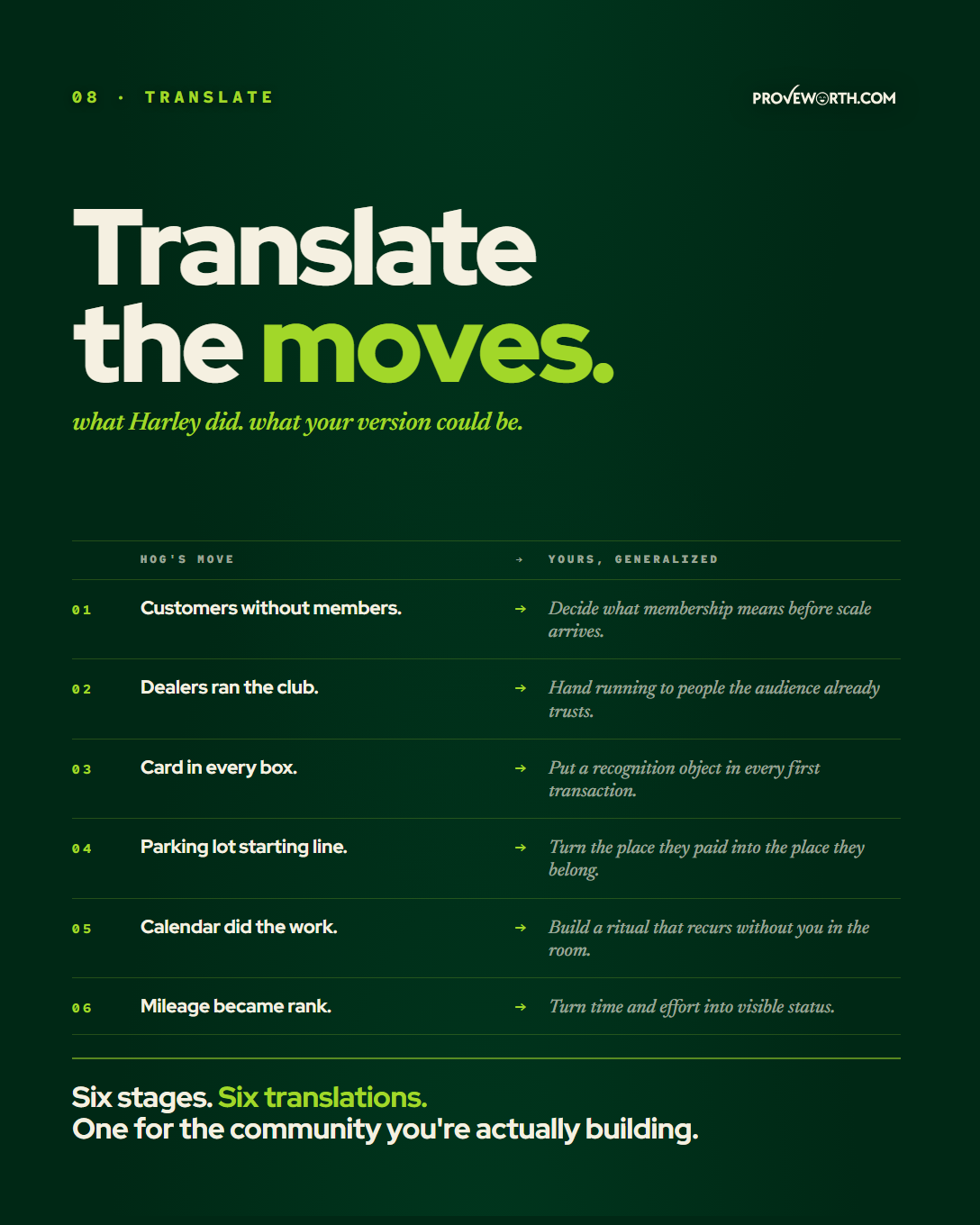
Harley ran six moves over forty-two years. Most of them translate to a community that has nothing to do with motorcycles. Below is the translation:
Customers without members (Stranger) → Decide what membership means before you scale anything. The list is the asset. Build it before the demand arrives.
Dealers ran the club (Skeptic) → Hand the running of your community to people the audience already trusts. The founder is the brand. The moderators are the trust.
Card in every box (Leap) → Put a recognition object in every first transaction. A welcome packet, a Loom, a printed letter, or a card. The first 24 hours decides the next 12 months.
Parking lot starting line (Win) → Turn the place your members joined into the place they belong. The dashboard is the parking lot. The first call is the first ride. Stage the introduction.
Calendar did the work (Regular) → Build a ritual that recurs without you in the room. First-Monday calls. Quarterly summits. A magazine they receive on the same day every quarter. The cadence is the retention.
Mileage became rank (Advocate) → Turn time and effort into visible status. Badges. Roles. Chapter Officer titles. Make the contribution legible to the next new member walking in.
Six stages. Six translations. One for the community you're actually building.
If you can name the move you're running at every one of these stages, the framework has done its job. If you can name three and not the other three, you have your audit. Start with the stage that's loudest.
Most communities feel hollow at scale because nobody mapped the journey. The buyer shows up at stage three, the founder is happy at stage three, and stages four through six become someone else's problem.
Harley solved this in 1983 by deciding that the journey was the product. The bike was the artifact. The membership was the experience. The chapters were the operating system. Forty-two years later that system is still running, mostly because nobody at Milwaukee tried to be clever and rebuild it.
"What's most rewarding has been to see the impact our motorcycles have on the lives of our customers." Willie G. Davidson, 2012
HOG is interesting because they made each stage somebody's job. Not always the factory's. Often the dealer's. Often the Road Captain's. Often the 47-year-old with the 100,000-mile pin who walked over in the parking lot. But always somebody's. The bike was the factory. The patch was the dealer. The Saturday ride was the chapter. The mileage pin was the rider. Every stage of the journey had an owner who wasn't the founder.
That is the real lesson and it sounds simple until you sit with your own community and try to name who owns each stage.
Don't let discovery happen by accident.
Journeys happen by design.
he MAPPED series studies how well-known brands and bands build customer journeys, mapped onto ProveWorth's six-stage framework, with receipts. Issue 01 (Electric Callboy) is already out.
If you run a community on Skool, Circle, Discord, your neighborhood or anywhere else, ProveWorth helps you turn member experience into something prospects can actually verify before they join. Every review human-audited. See what claiming your community page looks like, or browse more case studies on the blog.

Founder, ProveWorth
Built ProveWorth - the trust layer for human communities. We surface real reviews from real members across hundreds of communities, so you can find the one that fits and join with confidence.
Frequently Asked Questions
What is community-led growth?
Community-led growth is when member participation, member rituals, and member-produced experiences become the primary engine of acquisition, retention, and expansion, instead of traditional advertising. The classic case studies pull from SaaS (Notion, Figma, Duolingo), but the playbook predates software. Harley-Davidson built the original version in 1983 with the Harley Owners Group and ran it for forty-two years.
How does the Harley Owners Group (HOG) work?
HOG is the factory-sponsored membership program of Harley-Davidson, launched in 1983 by then-CEO Vaughn Beals. Every new Harley buyer received a free first-year HOG membership in the box with the bike, including a membership card, pin, and patch. Local chapters operate out of authorized dealerships rather than the factory. Today HOG runs more than 1M members across 1,400+ chapters in 100+ countries.
What's a real-world example of a customer journey?
The Harley Owners Group is one of the most-imitated real-world customer journey examples in business. Mapped onto a six-stage framework (Stranger, Skeptic, Leap, Win, Regular, Advocate), each stage matches a specific HOG move: free membership in every new bike, dealer-led chapters, a structured first-ride moment, the chapter calendar, mileage pins for long-time riders, and the Sturgis rally as an annual gathering. Most loyalty programs are weak imitations of moves Harley made first.
How do you keep members engaged after they sign up?
Build a calendar event that exists only because the community exists. Harley turned the calendar into the retention engine: First Saturday chapter meetings, Second Friday Bike Nights, the HOG magazine five issues a year, and a rally calendar built around Sturgis, Daytona, and Laconia. Members get returned to the community on a rhythm they don't have to remember. Without a ritual, members forget you by next month.
What's the difference between a customer base and a community?
A customer base is a list of people who bought from you. A community is a list of people who would tell another person to buy from you, without being asked. The work of turning the first list into the second is what a six-stage customer journey framework actually plans. Harley had a million customers in 1983 and zero members. By 2025, HOG ran 1M+ members across 100+ countries. The difference is the design.
ProveWorth
A page people can find
Reviews from the people who paid, on a URL you keep. The listing is free and the plans that do the asking start at $299 a month.
See the plansRelated Articles
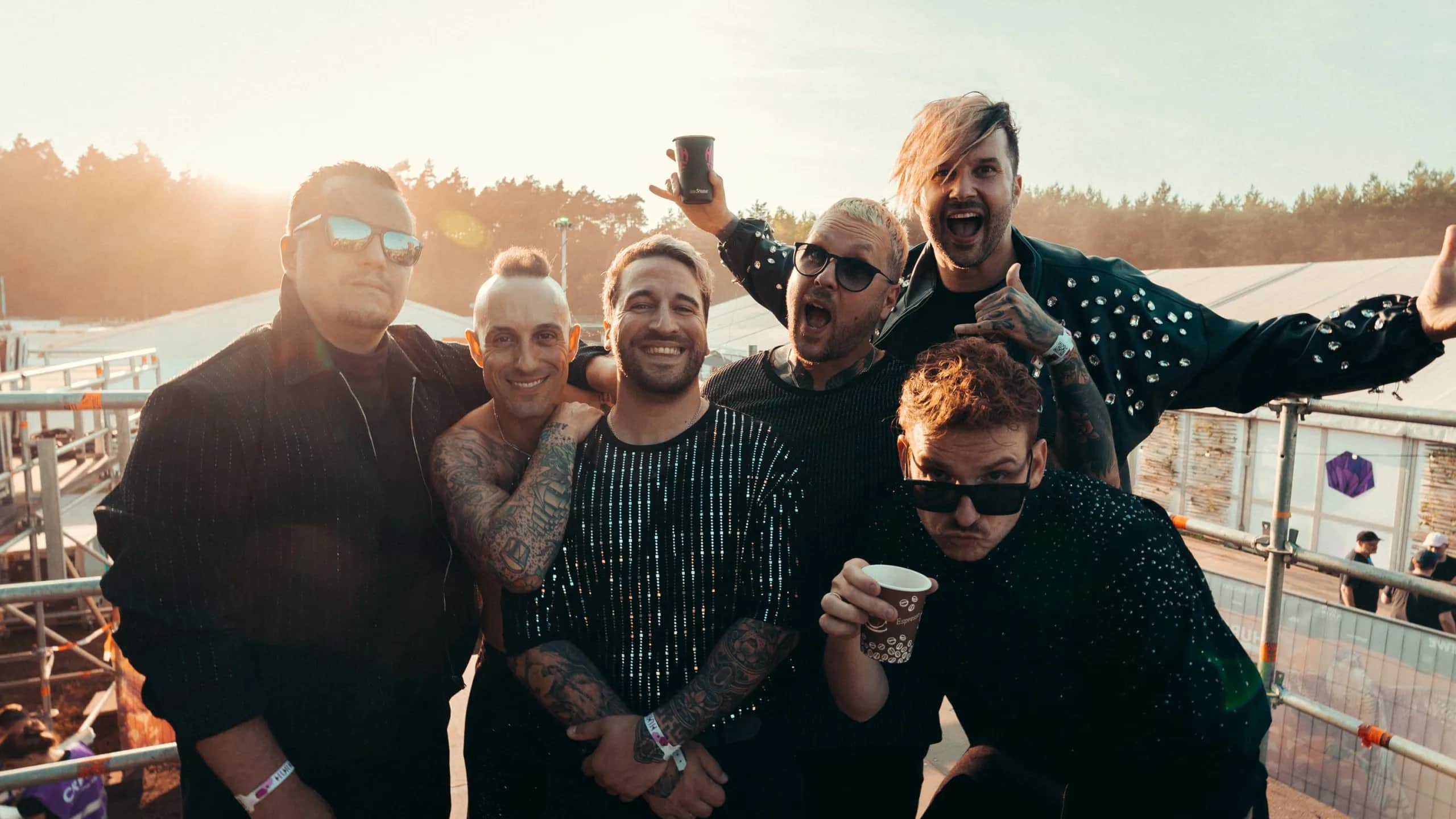
Community-Led Growth: An Electric Callboy Case Study
Community-led growth, mapped onto a six-stage customer journey, with Electric Callboy as the case study. A German metalcore band built it better than most SaaS.

Top 4 Resources for learning Vibe Marketing from scratch in 2026
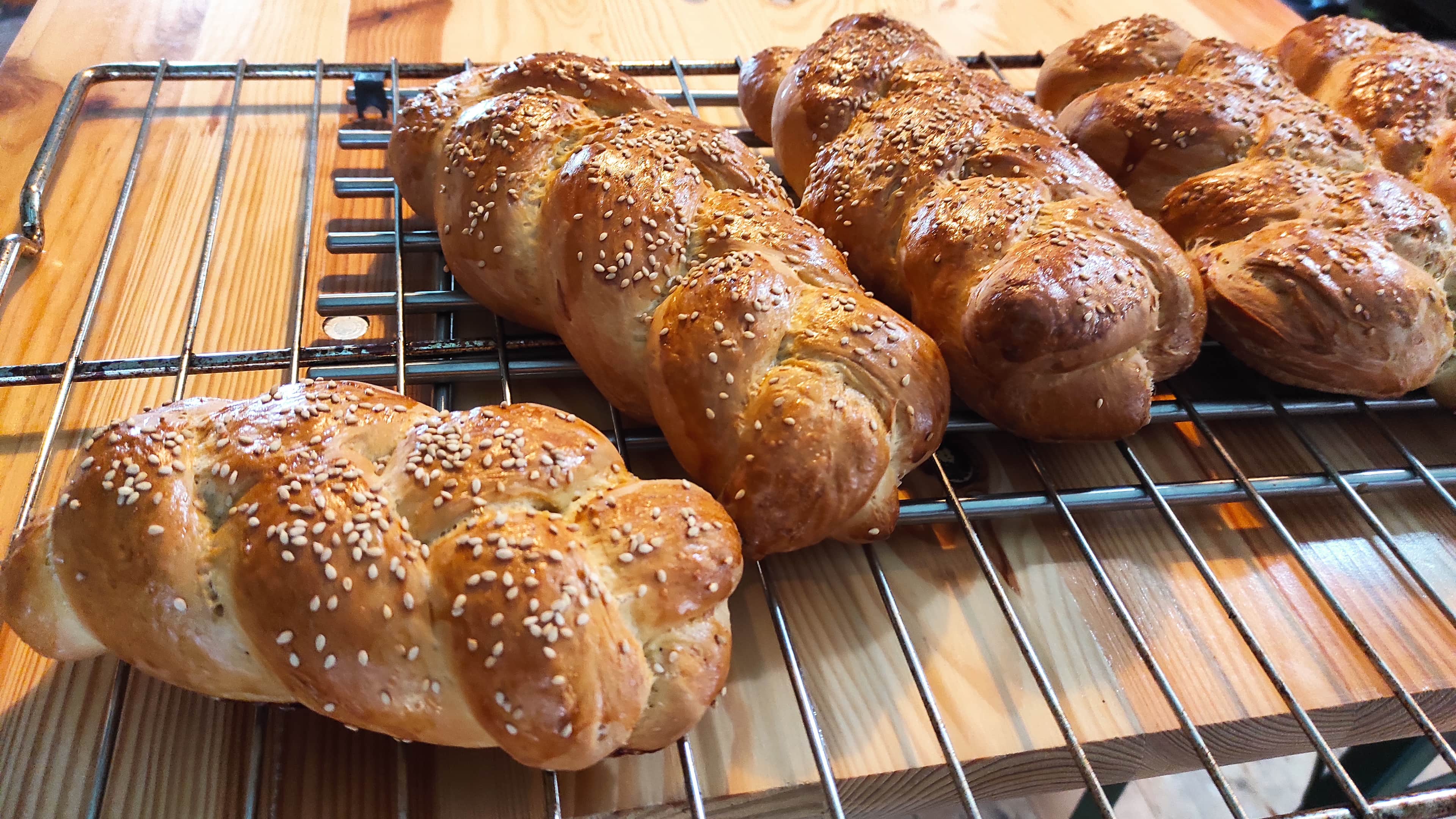
Crust & Crumb Academy Is How You Should Learn Bread Baking
Discover how Crust & Crumb Academy redefines bread baking education with personalized feedback, science-based techniques, and a community-focused approach.