
Published Last updated
How to win commercial accounts from property managers and HOAs
A 20-account list you build by hand, a one-page service brief, and a first email you can adapt and send.

Founder, ProveWorth

Key Takeaways
- 1Build a list of 20 property managers and HOAs near your route by hand, from public sources.
- 2Write a one-page service brief that promises only what your crew does today.
- 3Send a short first email that labels your reason for writing as a guess and asks for a 15-minute walk-through.
- 4CAN-SPAM makes no exception for business-to-business email, so include your postal address and honor opt-outs.
- 5Track commercial accounts apart from household inquiries, because they take longer to decide.
Commercial accounts start with a short list you build by hand. Pick 20 property managers or HOA boards near your route and find out who signs. Send each one a plain email about what you do and where. Expect a longer decision than a household makes.
Do property manager accounts work differently from household customers?
Yes. The person who says yes may need proof of insurance, a written scope and a response standard. They may also need approval from an owner or a board. Payment terms can differ from residential work.
A bigger contract is not automatically a more profitable one. Because these accounts take longer to decide, track them apart from household inquiries.
I found no public benchmark for how long that takes or what it returns. After your first 20 accounts you'll have your own.
How do I build a 20-account list?
Start with five steps, and none of them needs a purchased list.
- Decide what you can serve. Write down the property size, the distance from your existing route, the visit frequency and any reporting or emergency response you can really offer.
- Find properties from public sources. Search Google Maps for apartment communities and management companies in your service area. The property's own website usually names who runs it. Your household customers can also tell you which community they live in and who manages it.
- Record a business contact. Note the role and the published business email or contact form, not a personal address. Check the company and the role on its own website.
- Sort by fit. Keep the 20 that match your capacity best. A list of 20 you can name beats a list of 200 you can't.
- Write a one-page service brief. Cover what you do, where, and how often. Add your proof, such as reviews, photos and years in business, plus the insurance you actually carry. Say how you respond when something goes wrong. Promise only what your crew does today.
Here is a sheet with one fictional row, to show the columns.
| Property | Managed by | Who signs | Published contact | Minutes from route | Notes |
|---|---|---|---|---|---|
| Maple Ridge Apartments (example) | Example Property Group | Community manager | Contact form on its website | 6 | Dog park by the pool |
What does the first email say?
Keep it short and honest about what you don't know. This one is for a pet waste business. Swap in your own trade.
Subject: Weekly pet waste service near [Property name]
Hi [First name],
I run [Business name], a pet waste removal company. We already service homes on [nearby street] and pass [Property name] on our Tuesday route.
I don't know your property, so tell me if this is off base. Communities with a dog area sometimes want it kept clean without another task landing on the maintenance list.
If that's useful, I can send a one-page brief with what we do, how often, and the insurance we carry. I can also walk the property for 15 minutes and send a written scope. No contract needed to look.
[Your name], [phone], [business postal address]. If you'd rather not hear from me, reply and I'll take you off my list.
The reason for writing is labeled as a guess, because you can't know a private problem from a website. The ask is a walk-through, not a contract.
Email rules apply here. The FTC's CAN-SPAM guide says the law makes no exception for business-to-business email. Your message needs accurate sender details, a subject line that matches the content, a valid postal address and a way to opt out. You must honor an opt-out within 10 business days. Each violating email can carry penalties of up to $53,088.
How do I send the 20 emails?
In batches of five. Send, read the replies, fix the wording, then send the next five.
Follow up once, on a date you agreed to, instead of running a sequence. If a manager points you to a vendor form or a procurement process, use it.
Can I thank a property manager for a referral?
You can, but disclose it where the endorsement shows up. The FTC says a connection to an endorser should be disclosed clearly and conspicuously. The same usually goes if the endorser was paid or given something of value.
So skip any undisclosed referral fee. Ask the property's own policy before you offer anything.
How do I decide whether a bigger contract is worth it?
Work it out before you say yes. A large headline price can hide a poor margin.
| Check | What to find out |
|---|---|
| Crew time | The visits, hours and travel the account needs each month. |
| What you keep | The price minus labor, fuel, materials and disposal. |
| Paperwork | The insurance proof, scope documents and reporting they require. |
| Payment timing | When invoices get paid, from your own records. |
| Share of income | What happens to your month if this account leaves. |
Keep a date for each stage: first email, first reply, walk-through, written scope and decision. Pipeline value isn't collected revenue, so count an account only when you've been paid.
What do I do next?
Build the sheet first and fill in five rows. Then write the one-page brief.
Use the customer acquisition cost guide to price the effort, and the lifetime value guide to see what a recurring account is worth. The local SEO guide covers what a manager sees when they look you up.
Google says to create your Business Profile for your actual, real-world location, and to designate a service area if you travel to customers. A free ProveWorth page puts your services, towns and reviews in one place a manager can open. You can get your free page or see how it works.
Sources

Founder, ProveWorth
Built ProveWorth - the trust layer for human communities. We surface real reviews from real members across hundreds of communities, so you can find the one that fits and join with confidence.
Frequently Asked Questions
Who signs for a property manager account?
It varies. It may be a property manager, an HOA board or its management company, or the manager of one apartment community. Ask on the first call who else must approve.
What paperwork do property managers ask for?
They may ask for proof of insurance, a written scope, response standards and your invoicing terms. Send only what you really carry and do.
Do I email or call a property manager first?
Email suits a first note because a manager can forward it to an owner or a board. Follow up by phone if the reply asks for a call.
Does CAN-SPAM cover business email?
Yes. The FTC's guide says the law makes no exception for business-to-business email. Include your postal address, an honest subject line and a working opt-out.
Can I pay a manager a thank-you for a referral?
If a manager vouches for you publicly and you paid or gave them something, the FTC says to disclose that connection clearly. Ask the property's policy first.
Is a bigger contract better?
Not automatically. A large account can hide thin margins, slow payment or too much reliance on one customer. Work out what you keep per hour of crew time first.
ProveWorth
Reviews on your own page
Your business gets a free page and your customers write what goes on it. We read each review, publish it, and email you so you can reply.
Get your free pageSee the websites we buildRelated Guides
Nextdoor for a local service business: the free page, the paid options and how to tell them apart
The Business Page is free. Paid promotion is separate, and Nextdoor prints no price for it. Here is how to set up the page and track each result.
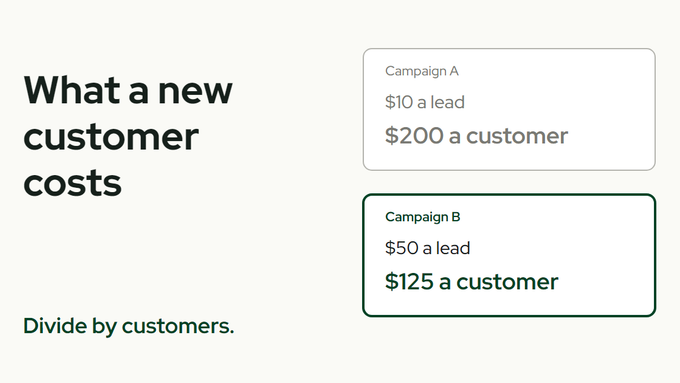
What does a new customer cost your service business?
A worked table, the one-truck example, and the few numbers worth writing down each month.
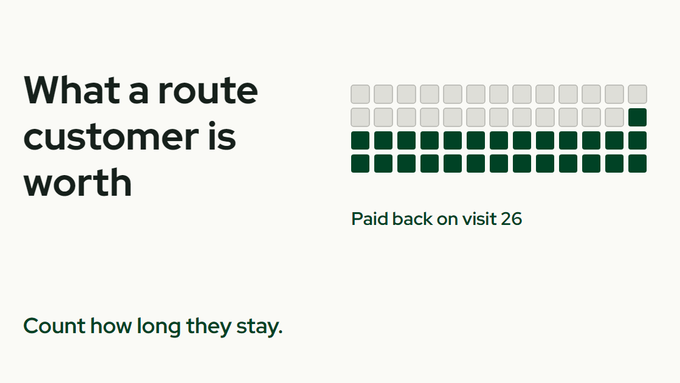
How to calculate what a weekly route customer is worth
Weekly route arithmetic, step by step, with the one number you have to measure instead of guess: how long customers stay.