
Published Last updated
Local SEO for a small business: a 90-day plan you run yourself
Google says you can't pay for a better local ranking. Here is a 90-day routine that takes about 15 minutes a week, and how to judge an agency if you want one.

Founder, ProveWorth
Key Takeaways
- 1Google says there is no way to request or pay for a better local ranking.
- 2Google says local results are mainly based on relevance, distance, and popularity. Its prominence section covers links and reviews.
- 3The 90-day plan is a way to manage the work, and Google gives no ranking timeframe.
- 4If a provider manages your Google profile, Google requires your consent and a transfer of ownership on request.
- 5Judge any provider on leads and calls, not on traffic or a ranking for one search.
You can't pay Google for a better local ranking. Google says so. What you can do is run a 90-day routine yourself. Confirm your facts, ask for reviews, publish one real page, and check in for 15 minutes a week. Ninety days is a planning frame. Google gives no ranking timeframe.
Can I pay Google to rank higher?
No. Google's help page says there's no way to request or pay for a better local ranking on Google. Google says local results are mainly based on relevance, distance, and popularity.
Relevance is how well your profile matches the search. Distance is how far you are from the searcher. Google explains the third factor as prominence, meaning how well-known a business is. That draws on links to your business and on your reviews.
You control very little of distance. Relevance and prominence are where a routine pays off.
What is the 90-day plan?
It is built from a maintenance cycle: confirm the facts, test the workflow, fix the biggest gap, then check on a schedule. You do it yourself, in short blocks.
| When | What you do | Done when |
|---|---|---|
| Days 1 to 7 | Confirm you own your Google Business Profile. Check that name, phone, hours and service area match your website. Test the phone and the contact link. Write down calls, review count and rating. | You can name your starting numbers |
| Days 8 to 14 | Send review requests to five customers. Check that the link works and note who replied. | Requests reach people |
| Days 15 to 30 | Fix the biggest gap on your profile or website, using real jobs, real photos and questions customers ask. Then search for yourself on your phone. | The public result is checked |
| Every week | Spend 15 minutes on new reviews to answer, missed calls and profile edits you didn't make. | The check stays short |
| Every month | Compare calls, reviews and booked jobs with your starting numbers. Pick the next bottleneck. | You chose one next step |
| Every quarter | Reconfirm hours, service area, who has access and any price you publish. | Nothing has drifted |
| Day 90 | Decide what to keep, change or drop. | The next 90 days have priorities |
What do I do in the first week?
Start with the facts, not a content calendar. Confirm that you are the owner of your Business Profile and that your business name, phone, hours and service area say the same thing everywhere.
A service business has one profile for its central location with a designated service area. Google asks you to create it for your real-world location.
Then call your own number and click your own contact link. A broken phone line undoes any ranking fix. Write down this month's calls, your review count and your rating. That is your baseline.
What do I do in days 8 to 30?
Test your review requests with five customers before you ask fifty. Check that the link opens, that the reviews arrive and that you can answer them. The review link and QR code guide and the review reply guide cover both steps.
Then fix the one biggest gap. Maybe your site has no page for your best-selling service. Maybe your profile has no photos of real jobs.
Write for people. Google's ranking systems prioritize helpful, reliable information created to benefit people instead of content made to manipulate rankings. A page that answers what a customer asks on the phone is that kind of page.
When it's published, search for yourself on a phone and read what shows. The Business Profile audit checklist covers the rest of your profile.
What do I check each week, month and quarter?
Weekly is a 15-minute look at three things: reviews waiting for a reply, calls you missed, and edits to your profile you didn't make. Keep it short enough that you'll actually do it.
Monthly, put your numbers next to your baseline. If calls are up and jobs aren't, your problem is after the call. If neither moved, pick the next gap.
Quarterly, recheck hours, service area, who has access and any price on your site.
Track your minutes too. If a routine you set up for 15 minutes takes two hours, change the scope or get help.
What do I decide on day 90?
Decide what to keep based on what you can show: calls, booked jobs and reviews. A long list of finished tasks doesn't count as a result.
If you're seasonal or take few jobs a month, extend the window. Three months of a slow season can't tell you much.
Should I hire a local SEO agency?
Maybe. Five things decide it: who owns what, your skills, your time, your risk, and what the provider can show.
A simple profile and a reliable owner may need only the checklist above. A busy owner may value a provider who monitors the routine and fixes failures. Both are reasonable.
Ask four questions. What is automated? What is reviewed by a person? What costs extra? What happens when you leave?
What does a local SEO agency cost?
No primary source gives a market price, so I won't give you a range. Ranges on agency blogs come from the agencies.
One vendor does publish a price. BrightLocal lists $1,299 a month for its managed local SEO service. That is one company's price list, so read it as a single data point.
The same vendor sells software you run yourself, and its cheapest plan for one location lists at $31 a month on annual billing. Software is a tool. Someone still has to use it.
Ask any provider for the total, the setup fee and what counts as extra work.
What do I own if I leave a provider?
If a provider manages your Google profile, Google's rules treat them as an authorized representative. They must never claim a profile without the owner's consent, and they must transfer ownership to the owner immediately on request.
Google also says website content must be owned and managed by the business owner. Breaking these rules may get the profile, the Google account, or both suspended.
So the exit-terms test is simple. Before you sign, get in writing that you own the profile, the site content and the accounts, and that they transfer when you ask.
What do case studies prove?
Read them for what they measure. BrightLocal's case study for a junk removal business says it reached number one in five months. The page shows that is one search that names a small town, number one on desktop and number two on mobile, with no lead counts.
Another BrightLocal case study, for an HVAC and plumbing company, says it doubled organic traffic in eight months. Its Search Console clicks went from 4.62K to 9.57K, which is 2.07 times. It reports no leads or calls.
Both are the vendor's account of its own work. Traffic and a single ranking are supporting numbers. Ask a provider for calls and booked jobs.
What do I do next?
Set a 15-minute weekly slot, then do days 1 to 7 this week. If you want the reviews question first, read whether Google reviews help SEO. For the money side, see the local SEO cost answer and the home service SEO guide.
A site that answers real questions gives people a place to land. On ProveWorth, your reviews live on your own page. You can get your free page, see how it works, or look at ProveWorth websites.
Sources
- Google Business Profile Help, improve your local ranking
- Google Search Central, creating helpful, reliable, people-first content
- Google Business Profile Help, authorized representative guidelines
- Google Business Profile Help, represent your business accurately
- BrightLocal, pricing (vendor price list)
- BrightLocal, junk removal case study (vendor account)
- BrightLocal, home services case study (vendor account)

Founder, ProveWorth
Built ProveWorth - the trust layer for human communities. We surface real reviews from real members across hundreds of communities, so you can find the one that fits and join with confidence.
Frequently Asked Questions
Can I pay Google to rank higher in local results?
No. Google says there is no way to request or pay for a better local ranking. Google says local results are mainly based on relevance, distance, and popularity.
How long does local SEO take?
No primary source gives a number of months. Google publishes no ranking timeframe. Use 90 days as a planning frame, then decide what to keep.
How much does a local SEO agency cost?
No primary source gives a market price. One vendor, BrightLocal, publishes $1,299 a month for its managed local SEO service. Ask any provider for total cost, setup and extras.
Can an agency run my Google Business Profile?
Yes, as an authorized representative. Google requires the owner's consent, no false claims and a transfer of ownership to you on request.
Who owns my website content if I leave an agency?
Google's rules say website content must be owned and managed by the business owner. Get that in writing before you sign.
Can I do local SEO myself?
Yes, if your profile is simple. A 15-minute weekly check, review requests and one useful page cover the basics. Hire help if you can't keep the routine.
ProveWorth
Reviews on your own page
Your business gets a free page and your customers write what goes on it. We read each review, publish it, and email you so you can reply.
Get your free pageSee the websites we buildRelated Guides
Nextdoor for a local service business: the free page, the paid options and how to tell them apart
The Business Page is free. Paid promotion is separate, and Nextdoor prints no price for it. Here is how to set up the page and track each result.
What does a new customer cost your service business?
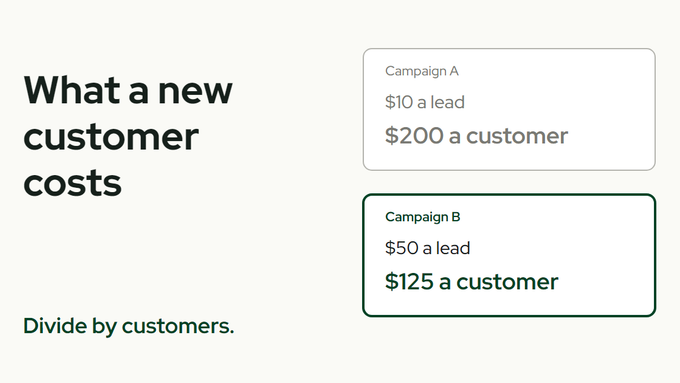
A worked table, the one-truck example, and the few numbers worth writing down each month.
How to calculate what a weekly route customer is worth
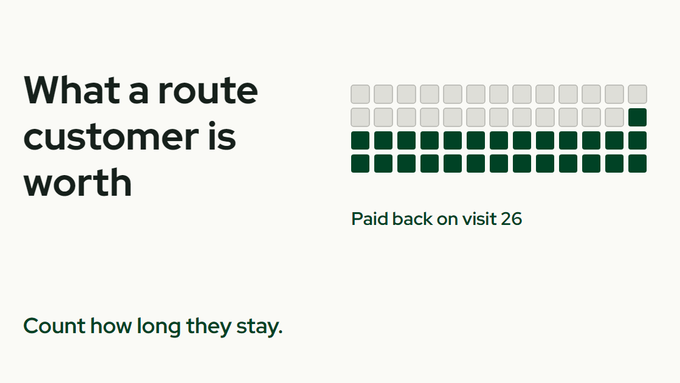
Weekly route arithmetic, step by step, with the one number you have to measure instead of guess: how long customers stay.